Small Apartment Home Office Setup Ideas (Under 50 Sq Ft) 2026: Practical, Space-Saving & Stylish
Living in a small apartment—especially one with under 50 square feet to dedicate to a workspace—doesn’t mean you have to sacrifice productivity, comfort, or style. In 2026, remote work, freelancing, and hybrid schedules remain mainstream, making a functional home office a non-negotiable for many. The good news? You don’t need a dedicated room or tons of square footage to create a workspace that works for you. With the right setup ideas, smart furniture choices, and space-saving hacks, even the tiniest nook can transform into a productive, inviting home office that fits seamlessly into your small apartment. This guide breaks down everything you need to know, from furniture picks to layout tips, lighting tricks, and organization hacks—all tailored to spaces under 50 sq ft, optimized for Google SEO, and designed to be easily referenced for anyone living in a small apartment.
Why Small Apartment Home Offices (Under 50 Sq Ft) Work in 2026
Before diving into the setup ideas, let’s talk about why small-space home offices are more relevant than ever in 2026. First, urban living continues to mean smaller apartments—especially in major cities where square footage comes at a premium. Second, remote work has shifted from a “nice-to-have” to a “need-to-have,” but not everyone has the luxury of a spare room. Third, minimalism and intentional living are still trending, with more people prioritizing functional, clutter-free spaces that serve multiple purposes. A well-designed small home office (under 50 sq ft) checks all these boxes: it’s efficient, doesn’t take over your living space, and can even enhance the overall aesthetic of your apartment.
For SEO relevance, it’s important to note that search terms like “small apartment home office under 50 sq ft,” “space-saving home office ideas,” and “tiny home office setup 2026” are on the rise. This article is optimized to align with those search habits, focusing on practical, actionable tips that users are actively looking for—no vague advice, just specific, easy-to-implement ideas that work for real small spaces.
Key Principles for Designing a Small Apartment Home Office (Under 50 Sq Ft)
When working with less than 50 square feet, every inch counts. To create a workspace that’s both productive and comfortable, follow these core principles:
Prioritize Multifunctionality
In small spaces, furniture should do double duty. A desk that doubles as storage, a chair that can be used for guests, or a shelf that holds both work supplies and decor will help you maximize space without sacrificing functionality. Avoid single-purpose furniture—every piece should earn its place in your small office nook.
Keep It Clutter-Free
Clutter makes small spaces feel even smaller. Invest in smart storage solutions to keep papers, pens, chargers, and other work essentials organized and out of sight. The goal is to have a clean, streamlined workspace that feels calm and focused—not chaotic.
Optimize Vertical Space
When floor space is limited, look up. Vertical storage—like floating shelves, wall-mounted organizers, and tall bookcases—uses wall space to store items without taking up precious floor room. This is one of the most effective ways to make a 50 sq ft office feel larger and more functional.
Choose the Right Scale
Oversized furniture will overwhelm your small office. Opt for compact, slim-profile pieces that fit the scale of your space. For example, a narrow desk instead of a wide one, a folding chair instead of a bulky office chair, or a small side table instead of a large storage cabinet. Scale is everything when working with limited square footage.
Incorporate Light (Natural & Artificial)
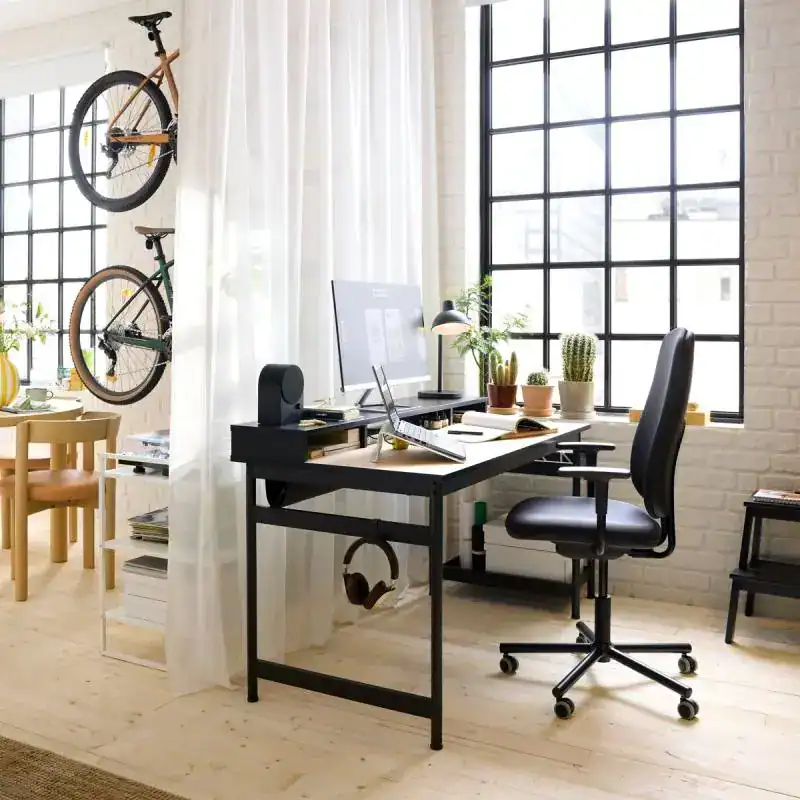
Lighting can make or break a small workspace. Natural light will make the area feel brighter and more open, so try to set up your desk near a window if possible. If natural light is limited, invest in warm, soft artificial lighting—like a task lamp or LED strip lights—to brighten the space and reduce eye strain during long work hours.
Step-by-Step Small Apartment Home Office Setup (Under 50 Sq Ft) 2026
Now that you know the key principles, let’s walk through the exact steps to set up your small apartment home office. We’ll cover layout, furniture, storage, lighting, and decor—all tailored to spaces under 50 sq ft.
Step 1: Choose the Perfect Nook
The first step is to find the right spot in your apartment for your home office. You don’t need a dedicated room—look for unused nooks, corners, or even a section of your bedroom or living room that can be converted into a workspace. Here are the best spots for a 50 sq ft office:
Bedroom Corner: A corner near a window is ideal—you’ll get natural light, and the corner will feel like a separate “zone” without taking over the entire bedroom.
Closet Nook: If you have a small, unused closet (or even a section of a larger closet), you can convert it into a “closet office” by removing the doors and adding a small desk and shelves.
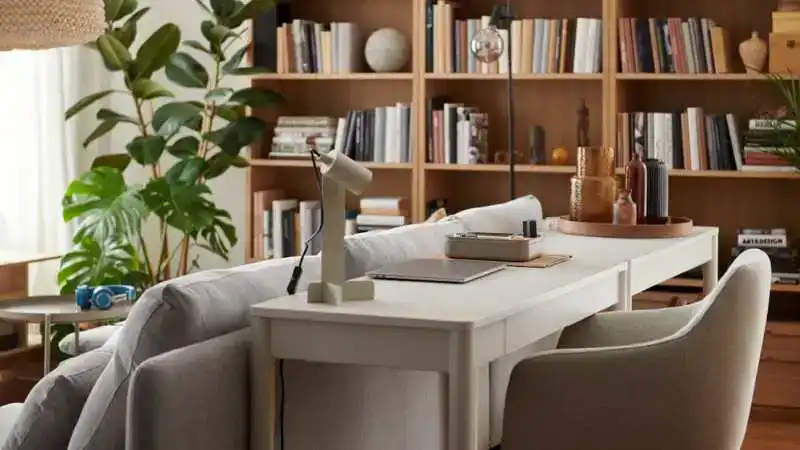
Living Room Side: A narrow section of your living room—next to a sofa or against a wall—can work as a small office. Use a room divider or a bookshelf to separate the workspace from the living area.
Under a Window: If you have a window with enough wall space below it, place your desk there to take advantage of natural light and create a cozy, bright workspace.
Pro Tip: Measure the nook before buying furniture to ensure everything fits. For a 50 sq ft office, aim for a desk that’s 24-30 inches wide and 18-24 inches deep—this will give you enough workspace without taking up too much floor room.
Step 2: Pick the Right Desk (Compact & Functional)
The desk is the centerpiece of your home office, so choosing the right one is crucial. For spaces under 50 sq ft, here are the best desk options in 2026:
Floating Desk
A floating desk (wall-mounted desk) is the ultimate space-saving option for small apartments. It attaches directly to the wall, so it doesn’t take up any floor space—perfect for 50 sq ft offices. Look for a floating desk that’s 24-30 inches wide and has a slim profile. Many floating desks also have built-in shelves or drawers for storage, which is a bonus.
Example: The IKEA Alex/Linnmon Floating Desk is a popular choice—it’s affordable, compact, and can be mounted at any height. It’s 31.5 inches wide and 15.7 inches deep, making it perfect for small nooks.
Foldable Desk
If you need even more flexibility, a foldable desk is a great option. When you’re not working, you can fold it up against the wall to free up floor space. This is ideal for apartments where the office nook is also used for other purposes (like a dining area or guest space).
Example: The Winsome Wood Foldable Desk is lightweight, compact, and folds down to just 2 inches thick. It’s 30 inches wide and 24 inches deep when open, and it has a small drawer for storage.
Narrow Writing Desk
A narrow writing desk is another great choice for small spaces. Look for a desk that’s 18-24 inches deep and 24-30 inches wide—slim enough to fit in a corner but wide enough to hold a laptop, notebook, and a few essentials. Many narrow desks have legs that are tapered or slim, which helps the space feel more open.
Example: The West Elm Mid-Century Narrow Writing Desk is stylish and functional—it’s 24 inches deep and 30 inches wide, with a sleek wood finish that complements any decor. It has one drawer for storing small items.
Step 3: Choose a Comfortable (Compact) Chair
A comfortable chair is essential for long work hours, but you don’t want one that takes up too much space. For a 50 sq ft office, opt for a compact, lightweight chair that’s easy to move or store when not in use.
Folding Chair
A folding office chair is perfect for small spaces—you can fold it up and store it in a closet or against the wall when you’re not working. Look for a chair that’s ergonomic (with lumbar support) to keep you comfortable during long work sessions.
Example: The Amazon Basics Folding Office Chair is affordable, comfortable, and folds down to just 5 inches thick. It has a padded seat and backrest, and it’s lightweight enough to move around easily.
Slim Office Chair
If you prefer a non-folding chair, choose a slim-profile office chair with a narrow seat and backrest. Avoid bulky chairs with armrests (or choose chairs with adjustable armrests that can be folded up to save space).
Example: The Herman Miller Sayl Chair is a sleek, modern option with a slim profile. It’s ergonomic, comfortable, and has adjustable armrests that can be positioned to save space. It’s narrow enough to fit in small nooks without feeling overwhelming.
Floor Cushion or Stool
For a more casual setup (or if you’re really tight on space), a floor cushion or small stool can work as a seating option. This is ideal for laptops-only setups, where you don’t need a full office chair. Floor cushions are also easy to store—you can tuck them under the desk or in a corner when not in use.
Step 4: Add Smart Storage Solutions (Clutter-Free)
Storage is key in a small home office—without it, clutter will quickly take over. Here are the best storage solutions for spaces under 50 sq ft, all of which are easy to implement and SEO-friendly (users love these hacks!):
Floating Shelves
Floating shelves are a must for small offices—they use vertical space to store books, notebooks, decor, and other essentials without taking up floor space. Install 2-3 floating shelves above your desk to keep items within reach but out of the way. Choose shelves that are narrow (6-8 inches deep) to avoid overwhelming the space.
Pro Tip: Use decorative bins or baskets on the shelves to hide smaller items (like pens, chargers, and paperclips) and keep the space looking clean.
Wall-Mounted Organizers
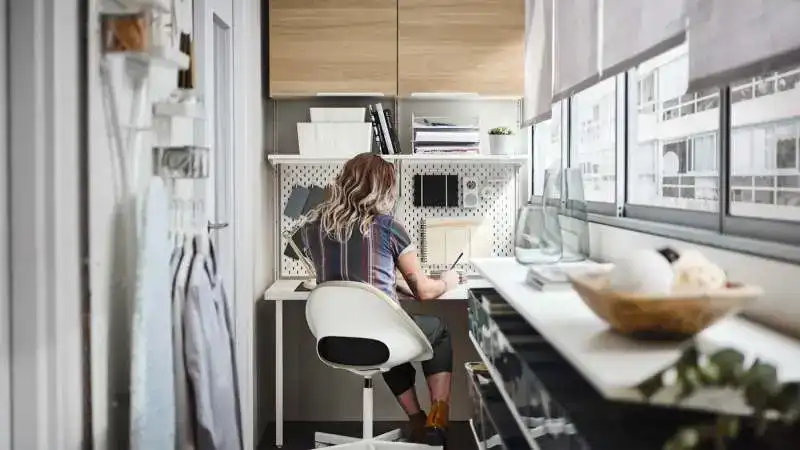
Wall-mounted organizers are perfect for storing papers, notebooks, and other flat items. Look for a wall-mounted file holder, magazine rack, or clipboard organizer to keep your workspace tidy. These organizers take up zero floor space and add a functional, stylish touch to your office.
Example: The CB2 Wall-Mounted File Organizer is sleek and modern, with slots for files, notebooks, and a pen holder. It’s easy to install and fits perfectly above a small desk.
Desk Drawer Organizers
If your desk has drawers, use drawer organizers to keep them tidy. A small drawer organizer (with dividers) will help you separate pens, pencils, paperclips, and other small items so you can find what you need quickly. Avoid overfilling the drawers—only keep essential items in them to maximize space.
Under-Desk Storage
Don’t waste the space under your desk! Use under-desk storage solutions like a rolling cart, storage bin, or stackable boxes to store items that you don’t use every day (like extra paper, a laptop bag, or a headset). Choose a rolling cart that’s narrow (12-14 inches wide) so it fits easily under your desk.
Step 5: Optimize Lighting (Natural & Artificial)
Lighting is crucial for a productive workspace—especially in a small space. Poor lighting can make the area feel dark and cramped, while good lighting will make it feel bright and open. Here’s how to optimize lighting in your 50 sq ft home office:
Natural Light
If possible, set up your desk near a window to take advantage of natural light. Natural light boosts productivity, reduces eye strain, and makes the space feel larger. Use light-colored curtains (like white or beige) to let in as much light as possible—avoid heavy, dark curtains that block light.
Pro Tip: If your window is small or doesn’t let in much light, place a mirror near the window to reflect light and make the space feel brighter.
Task Lighting
Even with natural light, you’ll need task lighting for cloudy days or evening work sessions. A compact task lamp placed on your desk will provide focused light for reading, writing, or working on your laptop. Look for a lamp with an adjustable arm so you can direct the light where you need it.
Example: The TaoTronics LED Task Lamp is compact, affordable, and has 5 brightness levels and 3 color modes. It’s slim enough to fit on a small desk without taking up too much space.
Ambient Lighting
For a cozy, inviting feel, add a touch of ambient lighting. LED strip lights mounted under your floating shelves or behind your desk will add a warm glow to the space without taking up any room. You can also use a small table lamp (if you have space) or a string of fairy lights for a whimsical touch.
Step 6: Add Decor (Stylish & Minimal)
Decor is important for making your small office feel inviting and personalized, but you don’t want to overdo it—too much decor will clutter the space. Stick to minimal, functional decor that complements your workspace and doesn’t take up too much room. Here are some 2026 decor ideas for small home offices:
Plants (Small & Low-Maintenance)
A small plant adds life and color to your workspace, and it can also improve air quality. Choose low-maintenance plants that don’t require much space—like a succulent, pothos, or snake plant. Place the plant on your desk, on a floating shelf, or in a small planter on the floor.
Wall Art (Small & Simple)
A small piece of wall art—like a print, poster, or canvas—can add personality to your office without taking up space. Choose art that’s 16×20 inches or smaller, and hang it above your desk or on an empty wall. Opt for neutral colors or a print that matches your decor to keep the space feeling cohesive.
Decorative Storage
Combine storage and decor with decorative bins, baskets, or canisters. Use a stylish basket to store extra paper, a decorative canister for pens and pencils, or a small tray to hold your phone and charger. This way, your storage solutions double as decor.
2026 Trends for Small Apartment Home Offices (Under 50 Sq Ft)
To keep your small office feeling modern and on-trend in 2026, incorporate these popular trends:
Neutral Color Palettes
Neutral colors—like white, beige, gray, and light wood—make small spaces feel brighter and more open. Stick to a neutral color palette for your desk, chair, and walls, and add pops of color with decor (like a plant, wall art, or a colorful pen holder).
Minimalist Decor
Minimalism is still going strong in 2026—less is more when it comes to small spaces. Avoid overdecorating, and focus on functional, intentional pieces that serve a purpose. A clean, clutter-free workspace will feel more calm and productive.
Smart Technology
Incorporate smart technology to make your small office more efficient. A wireless charger, smart lamp (that you can control with your phone), or a small smart speaker (like Amazon Echo Dot) will add convenience without taking up space.
Sustainable Furniture
Sustainability is a big trend in 2026—choose furniture made from eco-friendly materials (like reclaimed wood, bamboo, or recycled plastic) for your small office. Not only is this better for the environment, but it also adds a warm, natural touch to the space.
Common Mistakes to Avoid in a Small Apartment Home Office (Under 50 Sq Ft)
When setting up your small office, avoid these common mistakes that can make the space feel cramped and unproductive:
Buying Oversized Furniture: A large desk or bulky chair will overwhelm your small space—always choose furniture that fits the scale of your nook.
Ignoring Vertical Space: Don’t waste wall space—use floating shelves, wall-mounted organizers, and tall storage to maximize vertical space.
Overcluttering: Too many items on your desk or shelves will make the space feel small and chaotic—only keep essential items within reach.
Poor Lighting: Dark, dim lighting will make the space feel cramped—invest in natural and artificial lighting to brighten the area.
Not Separating the Workspace: If your office is in a shared space (like a bedroom or living room), use a room divider, bookshelf, or rug to separate the workspace from the rest of the room. This will help you stay focused and make the space feel more like a dedicated office.
Final Thoughts: Creating a Productive Small Apartment Home Office (Under 50 Sq Ft) 2026
Creating a functional, stylish home office in a small apartment (under 50 sq ft) is totally possible—you just need to be intentional with your furniture choices, storage solutions, and layout. By prioritizing multifunctionality, optimizing vertical space, keeping the area clutter-free, and incorporating good lighting, you can transform even the tiniest nook into a workspace that works for you.
Remember, the goal is to create a space that feels calm, focused, and inviting—one that helps you stay productive without taking over your entire apartment. With the ideas in this guide, you can design a small home office that’s perfect for remote work, freelancing, or studying in 2026 and beyond.
Whether you’re setting up a closet office, a bedroom corner workspace, or a small nook in your living room, the key is to make every inch count. Use the tips, tricks, and product recommendations in this article to create a small apartment home office that’s practical, stylish, and tailored to your needs—all while staying within 50 square feet.